


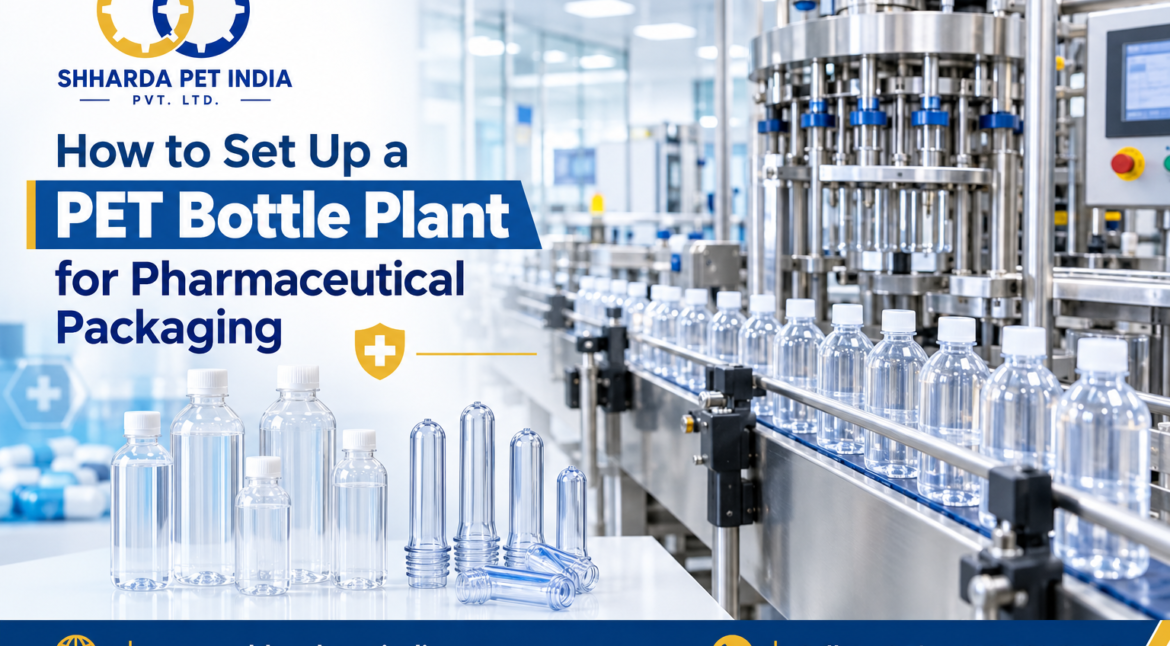
How to Set Up a PET Bottle Plant for Pharmaceutical Packaging
- Home
- Molding Machine
- How to Set Up a PET Bottle Plant for Pharmaceutical Packaging
A syrup bottle that leaks, clouds, or reacts with its contents can trigger a batch rejection or a recall. Pharma companies know this, so they buy from suppliers they trust.
That’s the opportunity, and the barrier. This guide covers the machinery, cleanroom, approvals, and budget you need to set up a PET bottle plant for pharmaceutical packaging.
Why Pharma Companies Choose PET Bottles

PET is lightweight, shatter-resistant, and clear. It offers a good moisture and gas barrier, and it recycles well. For liquid orals, syrups, suspensions, and some tablet and capsule packs, it often replaces glass.
Demand is steady for three reasons:
- Lower breakage and freight costs than glass
- Design flexibility in shapes, neck finishes and colours
- Consistent quality when production is controlled
Amber PET also protects light-sensitive formulations, which makes it a natural fit for pharma.
What Makes a Pharma PET Plant Different from a Beverage Plant
This is where most first-time investors go wrong. A PET bottle manufacturing plant for water or soft drinks can run in a standard industrial hall. A pharma plant can’t.
The differences:
- Hygiene: Production happens in a controlled, clean environment.
- Documentation: Every batch needs traceability, from resin lot to finished carton.
- Tolerances: Neck finish, wall thickness, and weight must stay consistent, because closures and dosing caps depend on them.
- Customer audits: Pharma buyers will inspect your facility before placing an order.
If you treat pharma as beverage with a nicer label, you’ll struggle to win customers.
Step 1: Research the Market and Pick Your Niche
Don’t try to serve every pharma segment at once. Start by identifying who will buy from you.
Choose your product range
Common pharma PET products include:
- Syrup and suspension bottles (30 ml to 500 ml)
- Dry syrup bottles
- Tablet and capsule containers
- Cough syrup and tonic bottles
- Nutraceutical and Ayurvedic liquid bottles
Study your local demand
Visit pharma clusters near you. Talk to procurement and packaging development teams. Ask what sizes they buy, what they pay, and what frustrates them about current suppliers.
Takeaway: Secure interest from two or three potential customers before you buy machinery.
Step 2: Write a Realistic Business Plan
A solid plan should cover capacity, product mix, customers, working capital, staffing and approvals. It also helps when you approach banks or investors.
Understanding PET bottle manufacturing plant cost
Costs vary widely, so treat any single number with caution. The main drivers are:
- Automation level: semi-automatic versus fully automatic
- Capacity: bottles per hour
- Cleanroom scale: a small clean zone versus a full facility
- Land and buildings: owned, leased or rented
- Utilities: compressed air, chilled water, power backup
- Testing equipment: the in-house quality lab
As a rough guide, a small semi-automatic setup costs far less than a fully automatic, cleanroom-equipped plant. The gap can be several crores. Get written quotes from at least three machinery suppliers and budget separately for working capital, since resin is your biggest running cost.
Step 3: Understand How Pharma PET Bottles Are Made
Before choosing machines, know the process. There are two routes.
Two-stage process
First, an injection moulding machine makes preforms, which look like test tubes with the bottle neck already formed. Then a stretch blow moulding machine reheats the preforms and blows them into bottles.
Single-stage process
One machine does both steps. It suits smaller runs and specialised shapes.
Which should you choose?
The two-stage route is popular for volume work and lets you sell preforms separately. Single-stage can suit niche, low-volume pharma shapes. Your target customers should decide this.
Step 4: Choose the Right Machinery
A typical pharma PET bottle plant needs:
- Resin dryer and dehumidifier: PET must be dried before moulding or the bottles will turn out weak and hazy.
- Injection moulding machine with hot-runner preform moulds
- Stretch blow moulding machine (semi-automatic or automatic)
- Mould set up for each bottle design
- Chiller and compressor: high-pressure air for blowing, chilled water for cooling
- Air filtration and dryers: compressed air must be clean and oil-free
- Leak and quality testing equipment
- Packing and labelling stations
Tips for buying machinery
- Ask for reference installations you can visit.
- Check spare parts and service support locally.
- Confirm the machine can hold tight tolerances on neck finishes.
- Compare energy consumption, not just purchase price.
A cheaper machine that drifts out of spec costs more in rejected batches than it saved.
Step 5: Design the Facility and Cleanroom
Layout matters more than most people expect. Plan a one-way flow from raw material to finished goods.
Key areas to plan
- Raw material storage (dry, dust-free)
- Preform and blowing area (the controlled zone)
- Quality control lab
- Finished goods packing and dispatch
- Personnel entry with gowning, and a separate material entry
Cleanroom basics
Pharma packaging buyers typically expect a controlled environment for blowing and packing. That usually means filtered air, positive pressure, smooth washable surfaces, and rules for gowning and movement. Many plants work toward an ISO Class 8 standard for the critical zone, but confirm the exact requirements with your target customers and a qualified consultant.
Get a cleanroom design specialist involved early. Fixing a layout after construction is expensive.
Step 6: Source the Right Raw Materials
Your resin choice shapes everything downstream.
- Use virgin, pharma-suitable PET resin from a reputable supplier.
- Request certificates of analysis and compliance documents for every lot.
- Keep colour masterbatch (for amber or opaque bottles) to the same standard.
- Do not mix recycled content unless the customer specifically approves it.
Takeaway: Supplier documentation is as important as the resin itself. Auditors will ask for it.
Step 7: Get Licences, Approvals and Certifications
Rules differ by state and product, so confirm the current requirements with local authorities. Typical steps include:
- Company and GST registration
- MSME/Udyam registration
- State pollution control board consent
- Factory licence and fire safety clearance
- Power and water connections
For pharma packaging, customers also look for:
- GMP-aligned practices, in line with India’s revised Schedule M expectations
- ISO 9001 Quality Management
- ISO 15378, the standard for primary packaging materials for medicinal products
Certification isn’t always legally required for a packaging supplier, but pharma buyers often treat it as a requirement. Plan for it from day one.
Step 8: Build a Quality Control System
Quality is your product. A good QC lab checks:
- Dimensions and neck finish
- Bottle weight and wall thickness
- Top-load strength
- Leak and torque tests with the matching closure
- Drop tests
- Clarity, colour and visual defects
Record every result. Keep batch records, and be ready to trace any bottle back to its resin lot.
Customers may also request extractables and leachables data or compatibility testing, so build relationships with accredited testing labs.
Step 9: Hire and Train the Right People
You don’t need a huge team. Start with:
- A plant manager with moulding experience
- A QC head who understands pharma documentation
- Trained machine operators
- A maintenance technician
Train everyone on hygiene, gowning and documentation. Human habits cause more contamination than machines do.
Step 10: Win Your First Customers
Once your samples pass, approach customers with confidence.
- Offer sample batches with full test reports.
- Be ready for vendor audits and questionnaires.
- Quote reliable lead times. Delays hurt more than slightly higher prices.
- Start with small contract manufacturers and mid-size pharma firms, then grow.
Trust takes time in pharma. Once you earn it, orders tend to repeat.
Common Mistakes to Avoid
- Underestimating working capital
- Buying machines before confirming customer demand
- Skipping the cleanroom planning stage
- Ignoring documentation until the first audit
- Choosing suppliers on price alone

Conclusion
Setting up a PET bottle plant for pharmaceutical packaging takes more planning than a standard bottle plant, but the market rewards reliability. Research your niche, choose machinery that fits your customers, build a compliant cleanroom, document everything, and treat quality as your main selling point.
Start small, prove your consistency, and scale once the audits go well.
What’s the biggest hurdle you face in starting a pharma packaging plant: budget, compliance, or finding customers? Tell us in the comments.
Frequently asked questions
Get In Touch
Fill all information details to consult with us to get services from us
It depends on the level of automation, capacity, cleanroom scale, and whether you own or rent the building. A small semi-automatic unit costs far less than a fully automatic, cleanroom-equipped plant. Get written quotes from at least three suppliers, and budget working capital separately.
Pharma plants need a controlled, clean environment, full batch traceability, tighter tolerances and readiness for customer audits. Beverage plants usually run in standard industrial halls with lighter documentation.
At minimum: a resin dryer, an injection moulding machine with preform moulds, a stretch blow moulding machine, a chiller, a compressor with air filtration, and leak and quality testing equipment. Packing and labelling stations complete the line.
Two-stage suits higher volumes and lets you sell preforms separately. Single-stage suits smaller runs and specialised shapes. Your target customers and order sizes should decide.
Most pharma buyers expect a controlled environment for blowing and packing. Many plants work toward ISO Class 8 for the critical zone, but confirm the requirement with your customers and a qualified cleanroom consultant.
ISO 9001 and ISO 15378 (primary packaging for medicinal products) are the most common. Buyers also look for GMP-aligned practices, in line with India’s revised Schedule M. Certification isn’t always legally required for a packaging supplier, but it often decides vendor approval.
Virgin, pharma-suitable PET resin from a reputable supplier, with a certificate of analysis for every lot. Avoid recycled content unless the customer specifically approves it.
Syrup and suspension bottles, dry syrup bottles, tablet and capsule containers, cough syrup and tonic bottles, and nutraceutical or Ayurvedic liquid bottles are common starting points.